
Street Fine Art Photography: When the City Becomes a Canvas
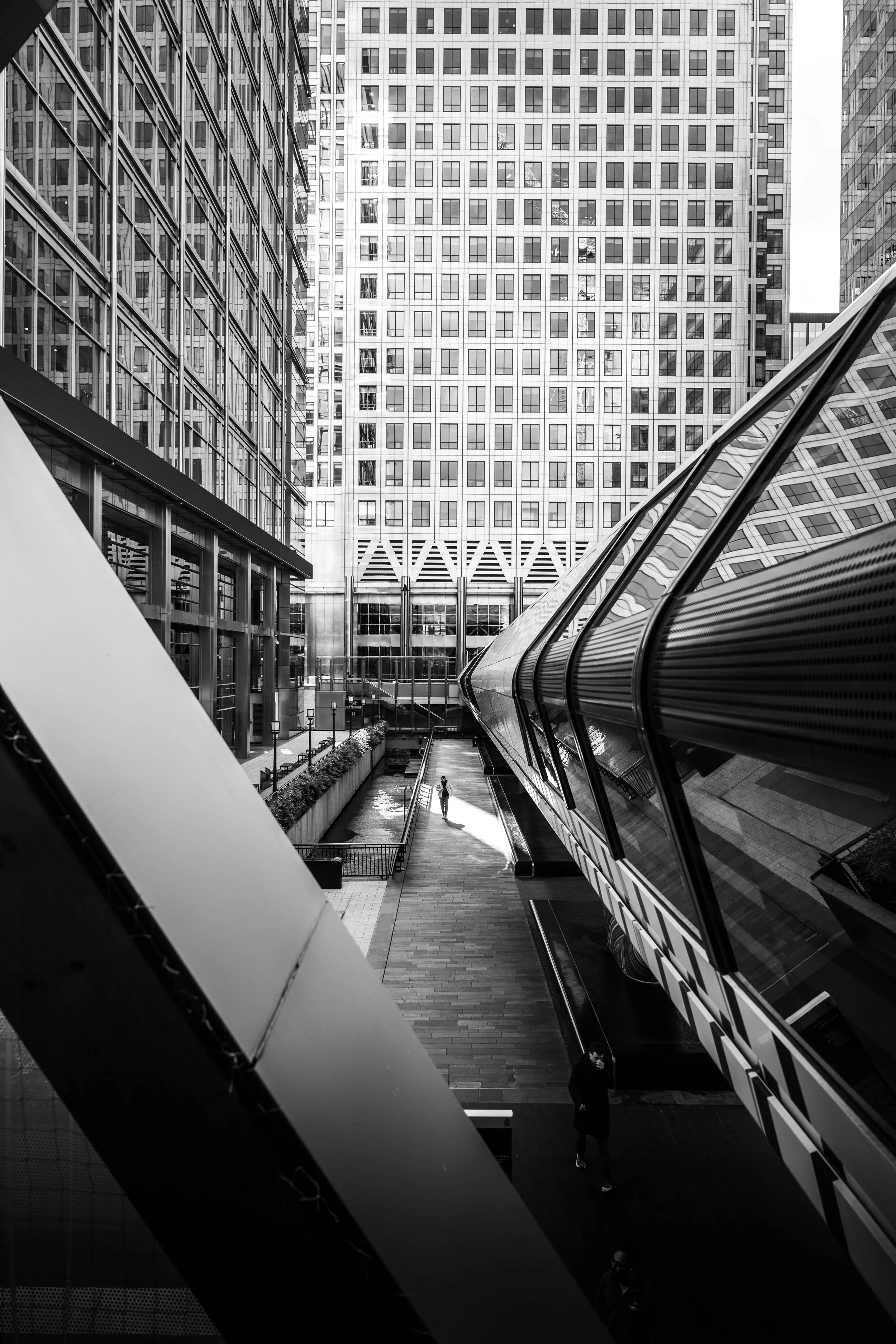
There is a version of street photography that chases moments — the decisive, the chaotic, the human drama unfolding on a pavement corner. And then there is another version, quieter and more deliberate, that treats the city as a painter treats a canvas: with intention, with composition, with something to say.
This second approach has a name: street fine art photography. And it is increasingly the language through which the most compelling urban images are being made.
---
What Makes Street Photography "Fine Art"?
The distinction isn't about equipment, post-processing, or whether an image gets printed large and hung on a wall. It's about intent.
Fine art photography begins with a visual idea — an interest in geometry, in light, in the tension between human scale and architectural mass, in the way a city reveals its inner logic when you know how to read it. The camera becomes the tool for expressing that idea, not simply recording what was there.
In practice, this means choosing your location because of what it offers, not just what it shows. It means waiting for the element that completes a composition rather than shooting continuously and hoping for luck. It means understanding that the photograph is being constructed — in the mind before the eye reaches the viewfinder — from light, form, space, and meaning.
---
Architecture as the Primary Subject
In street fine art photography, architecture stops being background. It becomes a co-subject, sometimes the primary one.
Buildings are dense with visual information: rhythm, repetition, shadow, reflection, scale, materiality. A glass curtain wall doesn't just reflect — it layers the present over the past, superimposing the modern city onto the historic one. A concrete corridor with a single curved ceiling transforms the human figure walking through it into something almost symbolic.
Reading architecture photographically is a discipline in itself. It requires understanding perspective and how it changes with distance and angle. It requires noticing where geometry creates natural frames. It requires patience — standing somewhere and watching how the light shifts, how different people move through a space, how the scene changes across minutes.
This is closer to the thinking of a painter than to what we usually imagine when we picture a street photographer.
---
The Human Figure as Compositional Element
One of the defining characteristics of street fine art photography is the role of the human figure — present, but considered rather than captured.
People in these images are rarely the subject in the journalistic sense. They are scale. They are context. They are the proof that a space is lived in, that architecture is not purely abstract. A solitary figure beneath a tower block speaks to the relationship between the individual and the built environment. Two figures moving in opposite directions through a symmetrical space create visual tension. A silhouette against a bright, reflective façade becomes something closer to symbol than portrait.
This requires a completely different approach to being in the street. You are not hunting for expressions or moments. You are composing — waiting for the right human element to enter the right position within a scene you have already identified and framed.
---
Light, Shadow, and the City's Hidden Geometry
Every city contains a hidden geometry that only becomes visible under the right light. Long shadows in late afternoon cut across paving stones at acute angles, turning ordinary ground into graphic composition. Overcast light flattens contrast and draws out texture. Rain transforms every surface into a mirror, doubling the city and complicating its layers.
Street fine art photographers learn to work with this. They develop a relationship with particular locations at particular times of day. They return. They observe. They understand that an ordinary scene in flat noon light can become extraordinary at the moment golden hour catches the edge of a glass tower and casts a blade of warm light across a pedestrian below.
This is not accidental photography. It is practised, studied, and deeply attentive.
---
A Practice Rooted in Seeing
What separates street fine art photographers from casual urban shooters is ultimately the quality of attention they bring to the visible world. This is a skill — not a talent — and it is learnable.
It begins with slowing down. With looking at a scene for longer than feels comfortable, waiting to understand what it is actually offering. With asking not "what is happening here?" but "what could be made here?" With noticing rhythm, proportion, contrast, and the weight of negative space.
It is, in many ways, the same discipline that painters bring to observation. The same willingness to be present to the visual world without immediately translating it into language or story. Just form, light, space, and intention.
The street is endlessly generous to those who learn to read it this way.
---
Sannib is a contemporary artist and photographer based in London, working across street fine art photography, architecture, and painting. He offers private 1-to-1 workshops in London for photographers at all levels. [sannib.com](https://www.sannib.com)