
Finding Your Visual Voice: How to Develop a Personal Language in Photography
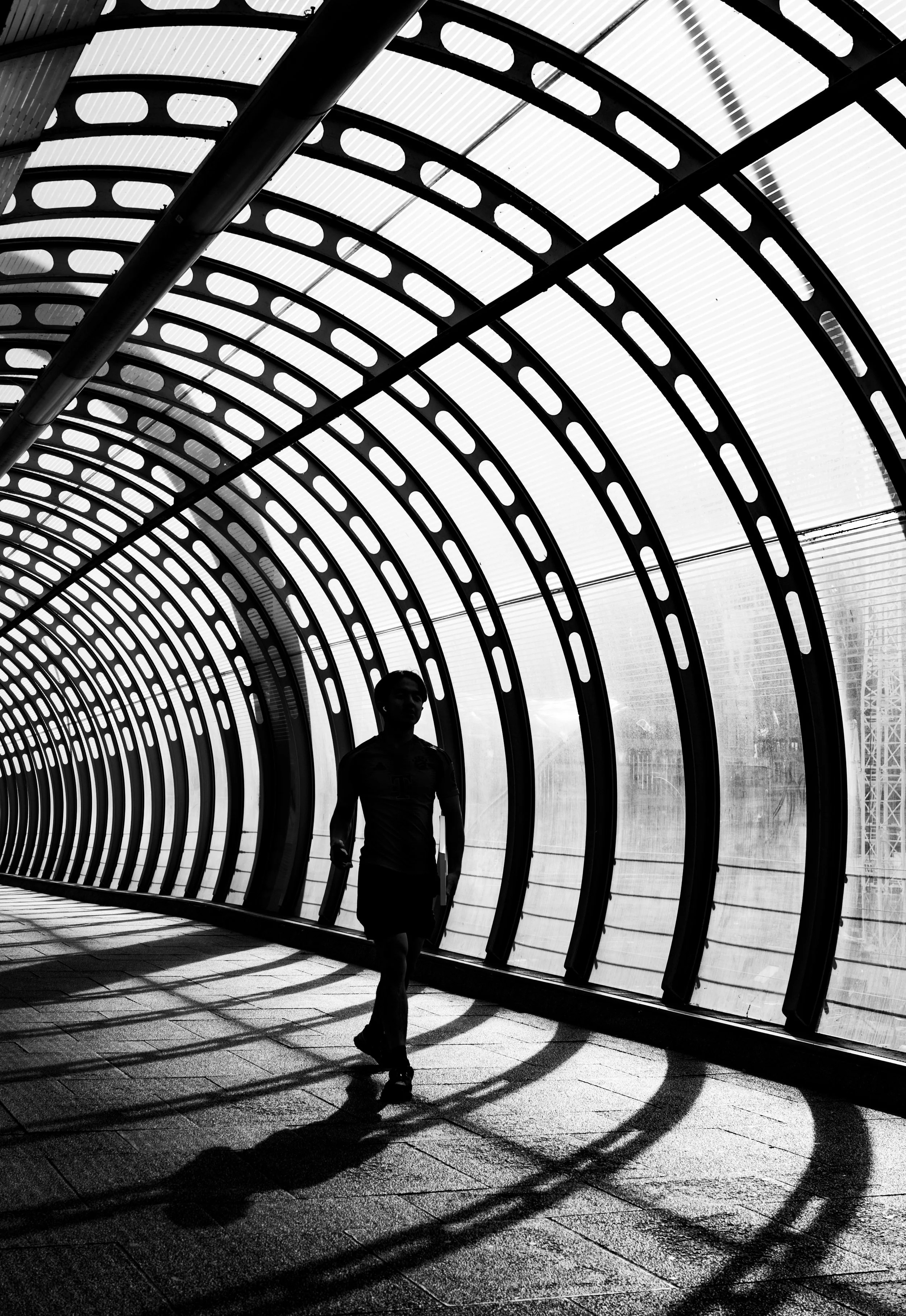
There is a moment that most serious photographers reach — sometimes after months, sometimes after years — when looking at their own images feels like looking at the work of someone who hasn't quite arrived yet. Technically competent. Compositionally reasonable. And somehow generic. Somehow not quite theirs.
This is not a crisis. It's a threshold. It's the point at which photography stops being about learning rules and starts being about finding a voice.
---
Why "Knowing the Rules" Isn't Enough
Most photographers spend their early development learning frameworks: the rule of thirds, leading lines, the golden hour, the histogram. These frameworks are useful scaffolding. They give you a structure when you don't yet have one of your own.
But the photographers whose work you remember — whose images stop you mid-scroll or stay with you for days after seeing them in a gallery — are not following frameworks. They are expressing something. A consistent way of seeing, a set of preoccupations, a visual intelligence that is distinctly theirs.
This is what a visual language is: not a set of techniques, but a coherent and personal relationship with the visible world.
---
Observation Before the Camera
Visual language begins not with shooting, but with looking. With spending time in spaces before deciding what to make from them. With noticing what consistently draws your attention — not what you think should draw it, but what actually does.
Some photographers are drawn to the relationship between light and surface. Others to the geometry of shadows. Others to the moment when a human figure creates an unexpected relationship with its surroundings. Still others to reflection, layering, or the visual tension between old and new.
None of these is more valid than another. But identifying which ones reliably pull your eye — and then deliberately cultivating that interest — is how a visual language begins to form.
The painter's question is useful here: What is this image about? Not what does it show, but what does it explore? What visual idea is it pursuing? If you can't answer that question about your own images, the work of developing a voice hasn't fully started yet.
---
Repetition and Return: The Studio Thinking of the Street Photographer
Studio artists work through ideas by returning to them — painting the same subject across multiple canvases, at different times of day, in different light, exploring the same spatial relationships through many iterations. The subject becomes a vehicle for investigating something beyond the subject itself.
Street fine art photographers can work this way too. Returning to the same location with the same preoccupations — testing different light, different weather, different human presences — produces a depth of engagement that single-visit shooting rarely achieves.
This kind of practice also reveals your visual priorities more clearly. When you've made fifty images of the same architectural space, the ones that feel most alive to you are telling you something about what you actually see, as distinct from what you think you should be photographing.
---
The Influence of Other Practices
For photographers who also work in other visual disciplines — painting, drawing, graphic design — there is a productive conversation to be had between those practices and photography.
The painter's attention to the weight and distribution of tonal values translates directly into understanding how to balance a photographic composition. The graphic designer's sensitivity to negative space and visual rhythm finds immediate application in architectural photography. The draughtsperson's discipline of sustained observational looking builds the patience that street fine art photography demands.
Photography and painting are not separate practices but part of the same way of seeing. The question of how light falls on a surface is the same question whether you are holding a brush or a camera. The compositional intelligence being brought to bear is the same intelligence. The visual ideas being pursued are the same ideas, expressed through different materials and processes.
For those working across multiple practices, each one deepens the others.
---
Learning to See With Someone Else
One of the fastest ways to accelerate the development of a personal visual language is to work alongside someone who can articulate what they see — and help you understand what you see, as distinct from what you're currently noticing.
This is the value of working with a mentor in the field. Not to adopt their visual approach, but to have yours reflected back to you with clarity. To hear someone say: you keep returning to this kind of relationship between a figure and a large surface — do you know why? Or: you're composing from the centre every time; what happens if you move the figure to the extreme edge?
These conversations — in real locations, in real light, in front of real scenes — accelerate the development of visual self-awareness in ways that online tutorials and theory simply cannot. Because vision develops through use, and use deepens through attention, and attention sharpens through considered feedback in the moment.
---
The City as an Ongoing Conversation
London contains, within a few square kilometres of its centre, an extraordinary compression of architectural history, human movement, and light. It is one of the most visually rich cities in the world for the kind of photography that is interested in space, geometry, and the relationship between the built environment and the people who inhabit it.
But beyond the city itself, what fine art photography ultimately offers is an ongoing practice of attentiveness. A reason to look more carefully at the world, to notice what most people pass by, to find the extraordinary within what is, to the untrained eye, simply ordinary.
That is the practice. And it does not end.
---
Sannib is a contemporary artist, photographer and painting practitioner based in London. He offers private 1-to-1 photography workshops exploring architecture, street fine art, and the development of personal visual language. All levels welcome. [sannib.com](https://www.sannib.com)